Fender Player vs Squier Classic Vibe: Is the Fender Worth the Extra Money?
This is the comparison I get asked about more than any other, usually by someone standing in a shop with a Squier Classic Vibe in one hand and a Fender Player in the other, wondering whether the extra few hundred dollars buys anything they will actually hear or feel. I have owned both a Classic Vibe ’60s Stratocaster and a Player Stratocaster, and I have set up plenty of each for friends. The honest answer is “sometimes”, and this article is about when.
I have already compared the Classic Vibe with the Affinity for people deciding within Squier, and covered the bigger Fender vs Gibson question. This one sits in between: the top Squier against the entry-level “real” Fender, on pickups, neck and frets, tremolo, finish, resale and the used market.
One thing to know before we start: in 2024 Fender replaced the original Player Series with the Player II. The changes are real but modest (rosewood fingerboards, rolled edges, new tuners), so I will treat “Player” as one family and flag where the II differs.
Where they are built and what that means
The Player is made in Fender’s Ensenada, Mexico factory; the Classic Vibe is made in Indonesia (earlier examples came from China). Owners on the forums have mostly stopped arguing about this, and rightly so: consistency on recent Classic Vibes is very good, and the Mexican factory has its own share of variation. Where the country of origin does matter is the perceived value at resale, which I come back to below.
Pickups: the biggest audible difference
Player Series Alnico V
The Player Stratocaster and Telecaster use Fender’s own alnico 5 single-coils, which are brighter, hotter and more modern-sounding than a vintage-spec pickup. They take overdrive well and cut through a band mix. Some players find the bridge pickup a touch harsh; a lot of them tame it with the tone control rather than swapping it.
Classic Vibe Fender-Designed alnico
The Classic Vibe’s “Fender-Designed” alnico pickups are voiced for the era the guitar imitates: the ’50s models are snappier, the ’60s models warmer and more chimey. What comes up again and again in owner threads is that these pickups are good enough that nobody bothers to replace them, which was not true of older Squiers. In a blind test through a clean amp, I would not bet money on telling the two apart. Through a driven amp, the Player’s extra output shows.
If you want the deeper background, my guide to single-coils vs humbuckers explains what “alnico” and “output” actually mean for your sound.
Neck and frets: this is where you should decide
Fret count and size
The Player has 22 medium-jumbo frets on a modern “C” neck with a 9.5-inch radius and a satin-finished back. The Classic Vibe has 21 narrow-tall frets on a “C” neck, also 9.5-inch, but with a gloss, tinted finish that mimics old lacquer. Narrow-tall frets feel slinkier for bends to some hands and “bumpy” to others. This is a hand-feel question, not a quality question, and it is the single best reason to play both before buying.
Finish and fret ends
The gloss neck on the Classic Vibe is the thing people either love (it looks the part) or hate (sticky in a hot room). The Player’s satin neck is the modern preference. On fret ends, the Player II’s rolled fingerboard edges are a genuine comfort upgrade; the original Player and the Classic Vibe are both fine but unrolled. Both benefit enormously from a professional setup, which I bang on about in just get it set up.
Tremolo, hardware and finish
The Player Stratocaster uses a two-point synchronised tremolo with block saddles; the Classic Vibe uses a vintage-style six-screw tremolo with bent-steel saddles. The two-point unit returns to pitch more reliably out of the box, but a well-set-up six-screw is perfectly usable for light vibrato and many players prefer its feel and tone. Tuners on the Player are sealed die-cast (ClassicGear vintage-style on the Player II); the Classic Vibe uses vintage-style split-shaft tuners that work well once you learn to wind them properly.
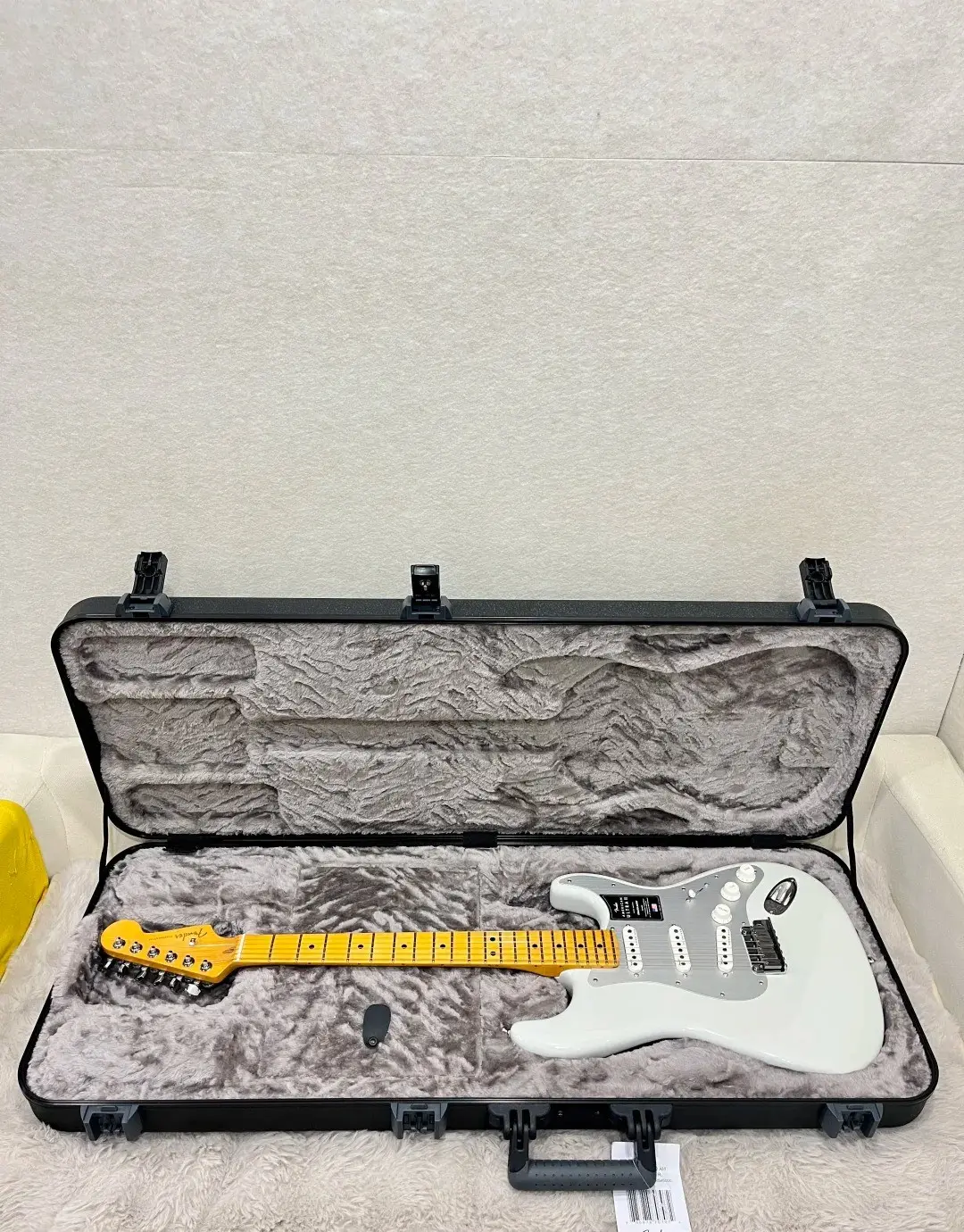
Finish quality on both is a gloss polyurethane and, frankly, the Classic Vibe sometimes looks more expensive thanks to the tinted neck and period colours. The Player has the wider colour palette and the headstock says “Fender”, which is worth exactly as much as you think it is.
Comparison table
| Spec | Fender Player / Player II Stratocaster | Squier Classic Vibe ’60s Stratocaster |
|---|---|---|
| Made in | Mexico | Indonesia |
| Body | Alder | Nyatoh (pine on some ’50s models) |
| Pickups | Player Series Alnico 5 single-coils | Fender-Designed alnico single-coils |
| Frets | 22 medium-jumbo, satin neck | 21 narrow-tall, gloss tinted neck |
| Tremolo | Two-point synchronised | Vintage six-screw |
| Price observed 2026 (USD, check listings) | Roughly $700–$850 new (Player II); $450–$600 used original Player | Roughly $400–$500 new; $300–$400 used |
This page contains affiliate links. If you buy through them, we may earn a commission at no extra cost to you.
Resale and the used market
This is the argument the Player wins outright. A used Player holds a large share of its price and sells quickly, because “Fender” on the headstock is a search term. A used Classic Vibe is a superb buy for the buyer and a slow, low-margin sale for the seller. If you think you may sell within two years, the Fender is cheaper to own than it looks.
The flip side: the best deal in this entire comparison is a used original Player from before the II, or a used Classic Vibe. Both turn up constantly in good condition. My beginner buying mistakes guide covers what to check on a used Strat before you hand over cash.
So is the Fender worth the extra money?
It depends on which “extra” you mean. If the choice is a new Classic Vibe against a used original Player at similar money, buy the Player: better tremolo, satin neck, easier resale, similar sound. If the choice is a new Classic Vibe against a new Player II with a gap of three hundred dollars or more, the Classic Vibe plus a professional setup and the rest of the money kept for an amp is the smarter musical decision for most beginners and intermediate players.
Riffbound verdict
Who it’s for: the Fender Player for players who want the modern neck, the two-point tremolo and the resale safety net; the Squier Classic Vibe for anyone who prioritises sound per dollar and vintage looks and feel.
Who should skip it: skip the Player if you are only paying for the headstock; skip the Classic Vibe if a gloss neck or narrow-tall frets bothered you in the shop, because no setup will change that.
The alternative worth a look: for a first guitar where neither is in budget, my best electric guitars under $500 round-up has the Classic Vibe alongside its main rivals.
Based on owner and teacher feedback, no paid testing. How we review.
FAQ
Is the Classic Vibe as good as a Mexican Fender?
In sound and build, close enough that most owners cannot tell without looking. The Player edges it on hardware and neck comfort, and wins clearly on resale.
Player or Player II?
The II is the nicer guitar (rolled edges, rosewood), but the original Player on the used market is the better value in 2026. Buy whichever you find in good condition at the right price.
Does the same comparison apply to Telecasters?
Yes, and if anything the Classic Vibe Telecasters get even more praise, because there is no tremolo to worry about and the neck feel is the main difference.
Which one should a complete beginner buy?
The Classic Vibe, set up properly, plus a decent amp. The Player becomes the right call when you know you love the instrument and want the one you will keep.
Sources and method
This synthesis is based on owner and teacher feedback read on the following communities (consulted in 2026), plus my own ownership of a Classic Vibe ’60s and a Player Stratocaster:
- r/Guitar (owner feedback, very high volume)
- Ultimate Guitar (reviews and forums)
- The Gear Page (in-depth gear discussion)
- Manufacturers’ official spec sheets (fender.com, including the Squier range)
We receive no free gear and no brand reads our articles. Merchant links are affiliate links: how we work.