Yamaha Pacifica 112V vs Squier Affinity Stratocaster: Which First Guitar in 2026?
Ask “what should my first electric guitar be?” on any forum in 2026 and two names come back within minutes: the Yamaha Pacifica 112V and the Squier Affinity Stratocaster. Both have been the default beginner recommendation for well over a decade, both sit in the same price bracket, and both are, honestly, good guitars. Which is exactly why the choice is so hard.
I have played and set up both more times than I can count, for my own students and for friends who wanted a straight answer. This is that straight answer: not a review of each one (we already have a full Yamaha Pacifica owner review), but a point-by-point duel on the things that actually matter when you are buying your first guitar: neck, pickups, factory setup, consistency, looks and resale.
Prices below are wide ranges observed in 2026; check current listings, because both models move around with promotions and finishes.
The two contenders in one minute
Yamaha Pacifica 112V
Alder body, bolt-on maple neck, rosewood fingerboard, 22 frets, 25.5-inch scale, an HSS pickup layout (two Alnico V single coils and an Alnico V humbucker at the bridge) with a push-pull tone knob that splits the humbucker, and a vintage-style six-screw tremolo. It usually sells for roughly $300–$350. Do not confuse it with the cheaper Pacifica 112J, which drops the Alnico pickups and the coil split.
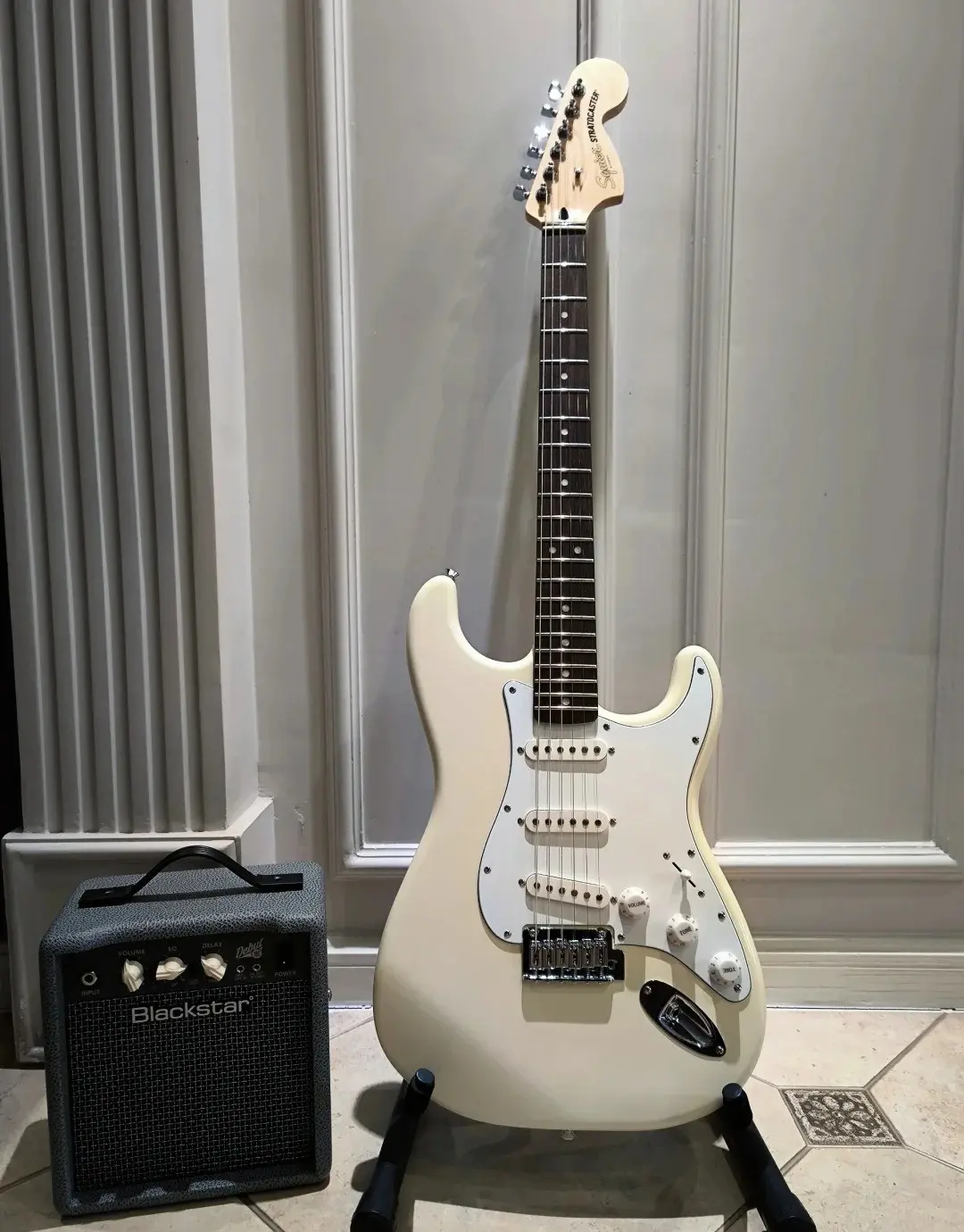
Squier Affinity Stratocaster
Poplar body, bolt-on maple neck with a “C” profile, maple or Indian laurel fingerboard, 21 frets, 25.5-inch scale, three ceramic single coils (an HSS version also exists), sealed die-cast tuners and, since the 2021 refresh, a two-point synchronised tremolo. Typical price is roughly $230–$300. It sits above the Squier Sonic line and below the Classic Vibe, which I compare in Squier Classic Vibe vs Affinity.
Neck and playability
This is where the two guitars feel most different in the hands, and it is the criterion I would weigh heaviest for a beginner.
The Pacifica neck is a fairly slim, flat-ish “C” with a rosewood board and 22 medium frets. Yamaha’s fretwork is the thing owners praise most consistently: fret ends are almost always smooth out of the box, even on guitars that have sat in a warehouse through a dry winter. The satin finish on the back of the neck is a small detail beginners love, because your hand does not stick when it gets warm.
The Affinity Strat has a slightly rounder “C” profile, a 9.5-inch fingerboard radius that makes barre chords a touch easier for small hands, and 21 frets. The body is thinner and lighter than a full-size Fender Strat, which some people find comfortable and others find a bit toy-like. Fret sprout (sharp fret ends poking out when the wood dries and shrinks) is reported more often than on the Yamaha, though it is far from universal and it is a ten-minute fix for any tech.
My take: both are easy to play once set up. The Yamaha feels a shade more “finished” straight from the box; the Squier feels more like the guitar everybody recognises.
Pickups: HSS versus SSS
The Pacifica 112V is the more versatile guitar on paper and in practice. The Alnico V single coils are warm and quiet enough for clean playing, and the bridge humbucker gives you a real rock and hard-rock voice that a three-single-coil Strat cannot produce without a pedal doing the heavy lifting. Pull the tone knob and the humbucker splits, which gets you surprisingly close to a Strat bridge sound. If you have not yet settled on a style, that flexibility is worth a lot; I explain why in single coil vs humbucker.
The Affinity’s three ceramic single coils are brighter and a little harsher than the Alnico pickups on pricier Squiers, but they deliver the classic positions 2 and 4 “quack” that no HSS guitar quite matches. If your heroes play clean, funk, blues, indie or country, the Squier’s layout is the more authentic one. The HSS Affinity Strat exists if you want a foot in both camps, though its bridge humbucker has no coil split.
Honest summary: for high-gain rock, the Yamaha wins; for the true Strat sound, the Squier wins; for “I do not know yet what I like”, the Yamaha wins.
Factory setup and consistency
Neither guitar is set up for you at the factory in any meaningful sense, and whichever you choose, the single best upgrade you can buy is a professional setup. I go through what that involves in just get it set up.
That said, consistency is not equal. Yamaha’s Indonesian plant has a reputation, backed by years of owner and teacher feedback, for turning out Pacificas that vary very little from one unit to the next: action in a sensible range, nut slots cut reasonably, intonation close. The Affinity line is built in higher volumes at a lower price, and the spread is wider. Most are fine, some are excellent, and a minority arrive with high action, a rough nut or a tremolo that does not sit level. Buying from a shop that checks guitars before shipping, or at least accepts easy returns, matters more with the Squier than with the Yamaha.
Hardware, looks and long-term value
Tuning stability and the tremolo
Both use vintage-style bridges that will drift if you dive-bomb, but the Affinity’s two-point tremolo and sealed tuners are a real step up from the old six-screw Affinity, and in normal use it holds tune well. The Pacifica’s six-screw tremolo and sealed tuners are equally competent. If tuning drifts on either, it is almost always the nut, not the bridge; blocking the tremolo with a small piece of wood is a free fix beginners rarely regret.
Finishes and the “cool factor”
I will not pretend this does not matter: a guitar you find beautiful is a guitar you pick up. The Squier looks like a Fender because it is shaped like one, and it comes in a wide range of classic and modern colours. The Pacifica has its own slightly offset shape and a smaller finish range, and some beginners simply find it less iconic. Others prefer that it does not look like every other first guitar in the school music room. Sit with photos of both for a day before deciding.
Resale
Used Pacifica 112Vs and Affinity Strats sell for a similar share of their new price, typically somewhere around half to two-thirds depending on condition and on how patient you are. The Squier finds a buyer faster because more people search for “Squier Strat”; the Yamaha tends to attract a buyer who knows exactly what they are getting. Neither is an investment, and neither will be a disaster to sell.
Head-to-head at a glance
| Criterion | Yamaha Pacifica 112V | Squier Affinity Stratocaster |
|---|---|---|
| Body and neck | Alder, maple neck, rosewood board, 22 frets | Poplar (thinner body), maple neck, maple or laurel board, 21 frets |
| Pickups | HSS, Alnico V, coil-split humbucker | SSS ceramic (HSS version available) |
| Bridge | Vintage six-screw tremolo | Two-point tremolo (2021 refresh) |
| Consistency out of the box | Very good, few surprises | Good, wider spread |
| Versatility | Clean to hard rock | Clean, blues, funk, indie; rock with pedals |
| Looks | Own design, limited finishes | Classic Strat, many finishes |
| Price observed in 2026 | Roughly $300–$350 | Roughly $230–$300 |
| Resale | Steady, informed buyers | Steady, quick to sell |
This page contains affiliate links. If you buy through them, we may earn a commission at no extra cost to you.
Riffbound verdict
Who it’s for: the Yamaha Pacifica 112V is for the beginner who has not chosen a style yet and wants the most consistent guitar out of the box. The Squier Affinity Stratocaster is for the beginner who already knows they want the Fender sound and look, and who wants to spend a little less.
Who should skip it: skip the Affinity if you are buying blind from a retailer with painful returns; skip the Pacifica if the look leaves you cold, because a guitar you do not love stays in its case.
The alternative worth a look: if you can stretch the budget, the Squier Classic Vibe Stratocaster gives you Alnico pickups and a nicer neck than either; see Classic Vibe vs Affinity.
Based on owner and teacher feedback, no paid testing. How we review.
Which one should you buy? Verdict by profile
You do not know your style yet
Yamaha. The HSS layout with coil split covers more ground, and the consistency means your first guitar will not be the reason you struggle.
You want the Fender sound and look on a budget
Squier. Nothing else at this price gives you the genuine Strat positions, and there is a big ecosystem of compatible parts if you ever want to upgrade.
Budget is tight to the last dollar
Squier, and put the difference into a setup and a decent practice amp. A well set-up Affinity beats an untouched Pacifica every day of the week. If you are still weighing the whole purchase, my guide on how to choose your first electric guitar walks through amp, cable and accessory budgets too.
You play mostly heavy music
Yamaha, without hesitation. The bridge humbucker is not a metal pickup, but it takes gain far better than a ceramic single coil.
FAQ
Is the Pacifica 112V better than the Affinity Strat?
Slightly, on build consistency and versatility, and it costs a little more for it. On pure Strat tone and looks the Squier is the more authentic guitar. Neither is a wrong choice.
Which one is easier for small hands?
They are very close. The Affinity’s rounder 9.5-inch radius and thinner body make it marginally easier for chords; the Pacifica’s slim neck makes it marginally easier for single-note playing. Try both in a shop if you can.
Should I get the Pacifica 112J to save money?
Only if the price gap is large. The 112V’s Alnico pickups and coil split are the main reasons it is recommended so often; the 112J is a decent guitar but it loses that edge over the Squier.
Do I need a specific amp for either?
No. Any small modelling practice amp will suit both. Budget for it: a guitar without an amp is a very quiet hobby.
Sources and method
This synthesis is based on owner and teacher feedback read on the following communities (consulted in 2026), plus my own experience setting up both models for students:
- r/Guitar (owner feedback, very high volume)
- Ultimate Guitar (reviews and forums)
- The Gear Page (in-depth gear discussion)
- Manufacturers’ official spec sheets (yamaha.com, fender.com)
We receive no free gear and no brand reads our articles. Merchant links are affiliate links: how we work.