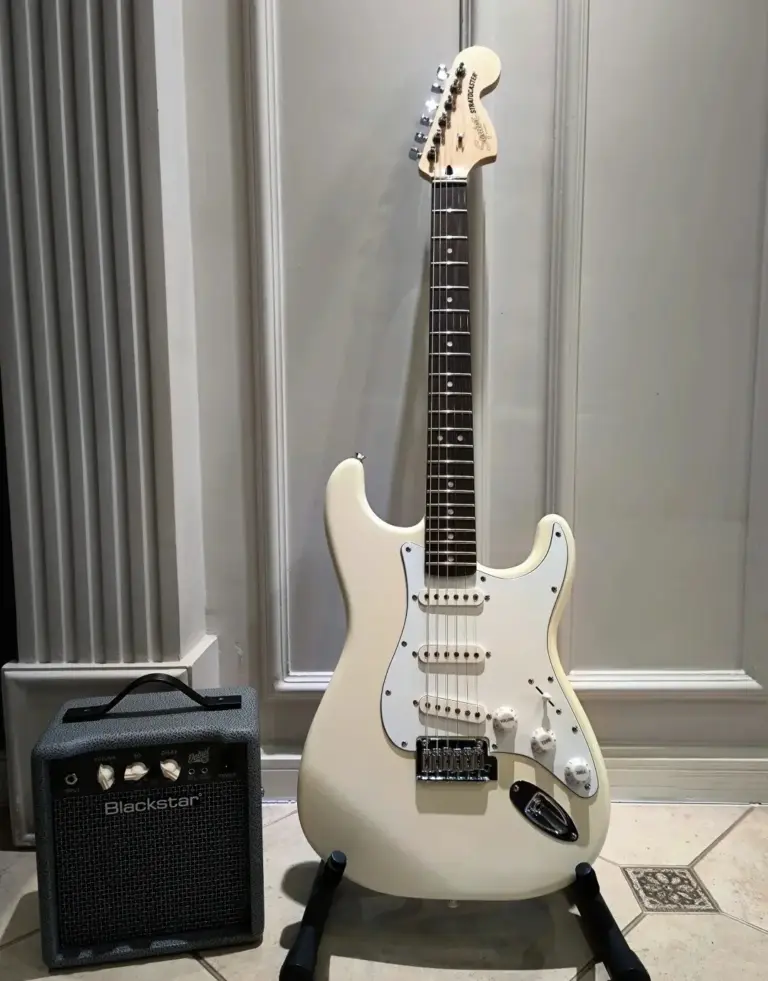
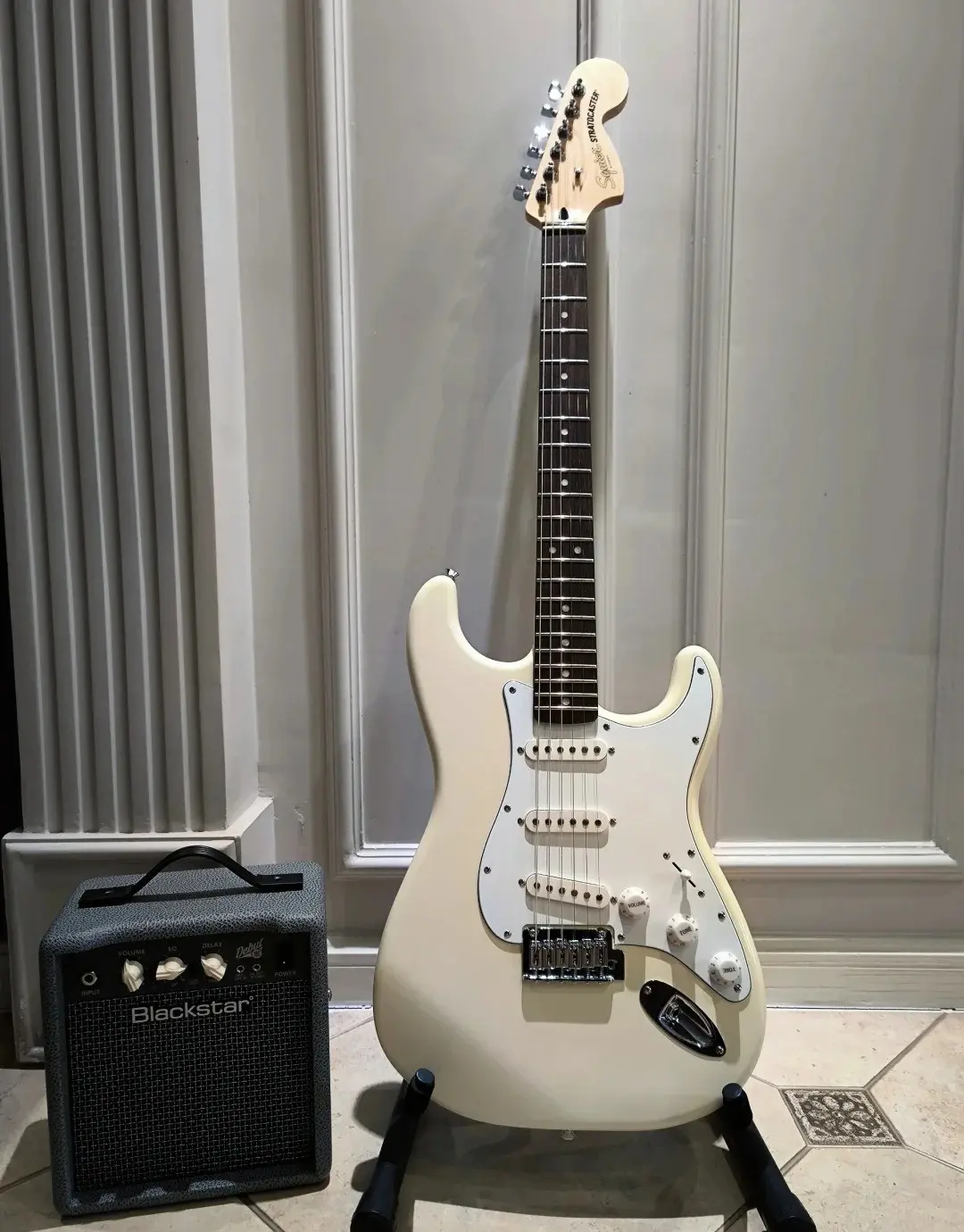
Squier Classic Vibe vs Affinity: What Owners Actually Say
“Should I get the Affinity or stretch to the Classic Vibe?” is one of the most-asked questions in English-speaking guitar communities. Both are Squiers, both are aimed at beginners — but owners and teachers are surprisingly clear about which one to buy. Here’s an honest round-up of what the forums actually say: the real strengths, and the catches.
Where these takes come from
This is a synthesis of recurring opinions across English-speaking communities (r/Guitar, Ultimate Guitar, The Gear Page) and beginner-focused teachers on YouTube. I’ve filtered out the one-off rants to keep the patterns that come up again and again from actual owners.
What owners love about the Classic Vibe
It punches way above its price
The single most repeated line: the Classic Vibe “feels like a real Fender.” Alnico pickups, a genuinely good neck, and a finish that embarrasses the price tag. For many, it’s the value benchmark of the whole beginner segment.
You won’t outgrow it quickly
Plenty of intermediate players keep a Classic Vibe in the rack. It records and gigs fine, especially after a setup — so it’s rarely “wasted money.”
What owners say about the Affinity
It’s the budget gateway — and it works
The Affinity (and the cheaper Bullet/Sonic) get you a totally playable guitar for the lowest outlay. As a first instrument or a mod platform, owners agree it does the job.
But the compromises are real
The ceramic pickups sound thinner and less defined than the Classic Vibe’s alnicos, the tuners are basic, and fret-end finishing is a bit of a lottery. None of it is a deal-breaker — but it’s why the community keeps saying the same thing.
The verdict the forums keep giving
1. “Stretch to the Classic Vibe if you possibly can”
This is near-unanimous. The price gap is small relative to the jump in pickups, feel and finish. If the budget allows, the Classic Vibe is the recommendation.
2. “Either way, get it set up”
The #1 piece of advice for any Squier: a proper setup (action, intonation, nut) transforms it. Many buy from a retailer that offers a setup, or budget for one — see our first guitar guide.
3. “Buy the Affinity used to save more”
If money is genuinely tight, a used Affinity plus a setup is the community’s fallback — and a great mod platform later.
The three Squier tiers side by side
Before you click “buy,” here is how the models that actually come up in these threads line up. Prices are wide ranges observed in 2026 for new instruments — they move with promotions and finishes, so check current listings.
| Model | Best for | Strengths | Weaknesses | Price range observed 2026 |
|---|---|---|---|---|
| Squier Classic Vibe ’50s/’60s/’70s Stratocaster | Beginners who want a guitar they will keep; intermediates on a budget | Alnico single-coils, tinted gloss neck, vintage-correct looks, strong resale | Costs noticeably more than the Affinity; still benefits from a setup | Roughly $400–$550 (check current listings) |
| Squier Classic Vibe ’50s/’60s Telecaster | Country, indie, blues and rock players who prefer a fixed bridge | Same alnico pickups and neck quality as the Strat; no tremolo to fight with; very stable tuning | Single-coil hum with high gain; plain looks for some | Roughly $400–$550 (check current listings) |
| Squier Affinity Stratocaster | Tight budgets, first-ever guitar, mod platform | Thin light body, satin neck, two-point tremolo on current models, very cheap used | Ceramic pickups, basic tuners, fret-end finishing varies | Roughly $220–$320 (check current listings) |
| Squier Affinity Telecaster | Same as above, for players who do not want a tremolo | Simpler hardware than the Strat, so fewer things to go wrong; light | Same ceramic pickups and tuners as the Affinity Strat | Roughly $220–$320 (check current listings) |
| Squier Sonic Stratocaster (replaced the Bullet) | Absolute minimum outlay, kids, a spare | Lightest and cheapest of the three; perfectly playable after a setup | Cheapest pickups and hardware in the range; you will want to upgrade sooner | Roughly $150–$250 (check current listings) |
This page contains affiliate links. If you buy through them, we may earn a commission at no extra cost to you.
New or used: what to check before you pay
Because both lines have been produced in huge numbers, the used market is full of them, and that is where I’d push most readers with a tight budget. A three-year-old Affinity that someone gave up on is often in near-new condition. Here is what I check, in order, whether I’m looking at a used Classic Vibe on a marketplace or a new one out of the box.
Neck and frets
Sight down the neck from the headstock: it should be almost straight with a hair of relief, not a banana. Run your hand along both edges of the fingerboard — sharp fret ends are the most common complaint on Affinity and Sonic models, and they are fixable but annoying. On a used guitar, look for deep divots in the first five frets; that is where beginners wear them out.
Electronics and hardware
Plug it in and wiggle every knob and the jack. Scratchy pots and a crackling switch are cheap to fix but a good bargaining chip. Turn each tuner a quarter turn and back: a stiff or wobbly tuner is normal on an Affinity and rare on a Classic Vibe. On a Strat, check that the tremolo sits flat or barely floating — a bridge pulled up at a steep angle means the springs were never balanced.
The “it just needs a setup” line
Sellers say this a lot. Sometimes it is true, sometimes it hides a twisted neck or a worn nut. My rule: if the guitar buzzes on every string above the twelfth fret and the action is already low, walk away. If the action is high and the intonation is off, that really is just a setup — read why “just get it set up” is the best advice you’ll get.
The upgrades that matter (and the ones that don’t)
Forum threads on modding Squiers run to hundreds of pages, so let me save you the reading. The consensus on what actually changes the playing experience, in order of impact per dollar:
- A setup. Not a mod, but it beats every mod on this list. Action, intonation, nut slots and tremolo springs.
- Tuners on an Affinity or Sonic. A set of decent sealed tuners fixes the “why won’t it stay in tune” complaints that dominate beginner threads. The Classic Vibe’s vintage-style tuners are usually fine as they are.
- Pickups on an Affinity. This is where the ceramic-versus-alnico gap lives. A pickup swap gets an Affinity remarkably close to a Classic Vibe in sound — but by the time you have paid for pickups and tuners, you are close to the price of a Classic Vibe anyway. That is the trap owners warn about most often.
- Nut. A bone or synthetic-bone nut, properly slotted, helps tuning stability on either model, especially if you use the tremolo.
What owners say is not worth it on either guitar: expensive bridges, boutique wiring kits, and cosmetic hardware swaps. If you are curious about why the pickups make such a difference, our guide to single-coils vs humbuckers explains what alnico and ceramic magnets do to the sound.
Which amp to pair it with
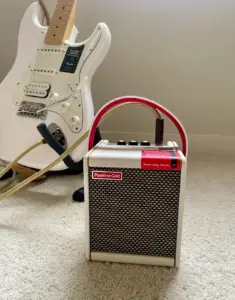
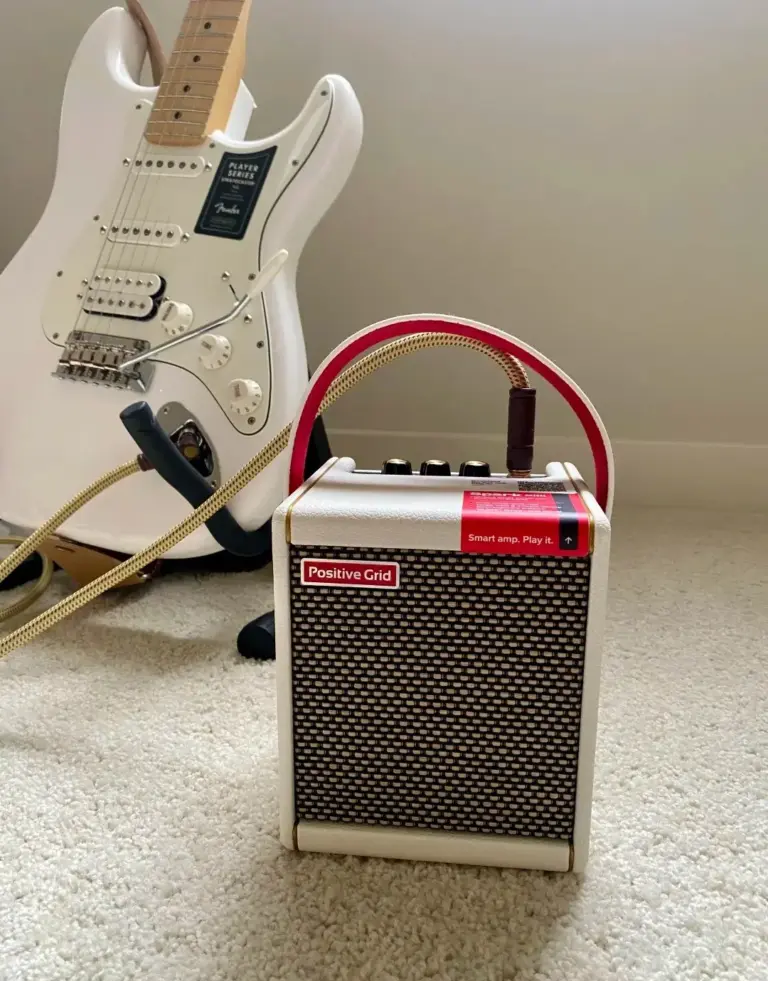
A Squier through a bad amp sounds like a bad guitar, and a lot of “my Affinity sounds thin” posts turn out to be a tiny practice amp with the treble cranked. Single-coils in particular reward an amp with real clean headroom. The names that come up most for a first pairing are the Boss Katana (the 50-watt version, or the Katana Mini if you’re desk-bound), the Fender Mustang LT25 for a very Fender-flavoured clean, the Positive Grid Spark if you practise with an app, and the Yamaha THR10II for bedroom volume. Any of those will flatter a Classic Vibe and make an Affinity sound far better than its price. I’ve compared them in detail in the best first guitar amps under $200.
Before you order: the checklist
- Decide Strat or Tele first — tremolo or fixed bridge is a bigger daily difference than Affinity vs Classic Vibe.
- If the Classic Vibe is within reach, buy it and skip the upgrade cycle.
- If not, buy the Affinity used and put the saving into a setup and a decent amp.
- Order from a retailer with a returns window and inspect the neck and fret ends on day one.
- Budget for a tuner, strap, cable and picks if you don’t already own them — see our accessories list.
- Still torn between Squier and something else entirely? The Pacifica 112V vs Affinity Stratocaster match-up is the other thread beginners keep starting.
My honest take
The forums are right: the Classic Vibe is the sweet spot and worth the small stretch, while the Affinity is a fine budget start — especially used and set up properly. There’s no bad choice here, just a clear better-value pick. Compare with our best electric guitars under $500.
Riffbound verdict
Who it’s for: The Classic Vibe is for anyone who can stretch to it and wants one guitar that will still be in the rack in five years. The Affinity is for the strict-budget buyer, ideally bought used, and for anyone who enjoys the idea of upgrading parts over time.
Who should skip it: If you already know you want heavy, high-gain tones, neither single-coil Squier is the natural pick — look at a humbucker guitar instead. And if you are paying new-Affinity money plus new pickups plus new tuners, stop: you have reached Classic Vibe territory.
The alternative worth a look: The Yamaha Pacifica 112V, which wins on out-of-the-box consistency and adds a humbucker — see our Pacifica 112V owner review. If you are tempted by the step above the Classic Vibe, read Fender Player vs Squier Classic Vibe before you spend the extra.
Based on owner and teacher feedback, no paid testing. How we review.
FAQ
Is the Classic Vibe really worth the extra money?
Per the community, yes: the pickups, neck and finish are a clear step up for a relatively small price difference.
Is the Affinity good enough to learn on?
Absolutely — set it up and it’s a perfectly good first guitar. The main upgrades later are pickups and tuners.
Do I really need a setup?
It’s the most repeated tip for a reason: action and intonation make or break the playing experience on any budget guitar.
Squier or Yamaha Pacifica?
Both are beloved beginner picks. Squier gives you the classic Fender shapes; the Pacifica is praised for out-of-the-box consistency. See our Pacifica owner reviews.
What happened to the Squier Bullet?
Squier replaced the Bullet line with the Sonic series in 2023. The Sonic fills the same slot below the Affinity: lightest, cheapest, and the one you will want to upgrade soonest. Plenty of used Bullets are still around and they are fine as a first guitar with a setup.
Is the Classic Vibe as good as a Fender Player?
Not quite, and owners are honest about that: the Player gets you better hardware, a Mexican-built neck and higher resale. But the gap between Affinity and Classic Vibe is far bigger than the gap between Classic Vibe and Player, which is why the Classic Vibe keeps being called the value sweet spot.
Sources and method
This synthesis is based on owner and teacher feedback read on the following communities (consulted in 2026): threads comparing the Affinity and Classic Vibe series, long-term ownership reports and setup and modding discussions.
- r/Guitar (owner feedback, very high volume)
- Ultimate Guitar (reviews and forums)
- The Gear Page (in-depth gear discussion)
- Manufacturers’ official spec sheets (fender.com for Squier, yamaha.com for the Pacifica)
We receive no free gear and no brand reads our articles. Merchant links are affiliate links: how we work.