Why Does My Guitar Keep Going Out of Tune? 8 Causes (and Fixes)
A guitar that will not stay in tune is the most demoralising thing for a beginner, because you cannot tell whether you are playing badly or the instrument is lying to you. My first electric drifted flat halfway through every practice session and I blamed my ears. It was not my ears. It was a set of strings I had never stretched, wound around the tuning posts like a ball of wool.
The good news is that tuning instability almost always has a mechanical cause, and most of them are cheap or free to fix. Below are the eight causes I run into most often, grouped in the order I check them, then a step-by-step diagnosis and a table with fix and cost range. If you are not yet confident getting the guitar in tune in the first place, start with how to tune a guitar; this article is about keeping it there.
Strings and winding: causes 1 and 2
Cause 1: new strings that were never stretched
The number one cause for beginners, and the one that comes up again and again on the forums. Fresh strings settle over the first hour or two of playing: the wraps tighten on the post, the string seats into nut and saddle, and the metal stretches slightly. Until then the guitar goes flat every few minutes. The fix: tune to pitch, gently pull each string an inch away from the fretboard around the twelfth fret, retune, and repeat three or four times until it stops dropping. Five minutes. The full routine is in how to change electric guitar strings.
Cause 2: sloppy winding on the tuning posts
Six overlapping wraps piled on a post, or wraps climbing upward, are six places where slack can hide. Bend a note, the wraps shift, the string ends up flat. Aim for two or three neat wraps on the wound strings and three or four on the plain ones, winding downward from the hole. Too few and the string slips; too many and it never settles.
Nut and bridge: causes 3 and 4
Cause 3: a binding nut
The tell-tale sign: you tune up, the string goes sharp after a bend, or you hear a faint “ping” while tuning. The string is catching in a slot that is too narrow, rough or dry, so it is at pitch on one side of the nut and not the other. Vintage-style tremolo guitars suffer most, but cheap plastic nuts on fixed-bridge guitars do it too. The fix: scrape pencil graphite into each slot or use a nut lubricant. If the ping persists, the slot needs widening with nut files, which I would leave to a tech; it is on the list in why you should just get your guitar set up.
Cause 4: the tremolo
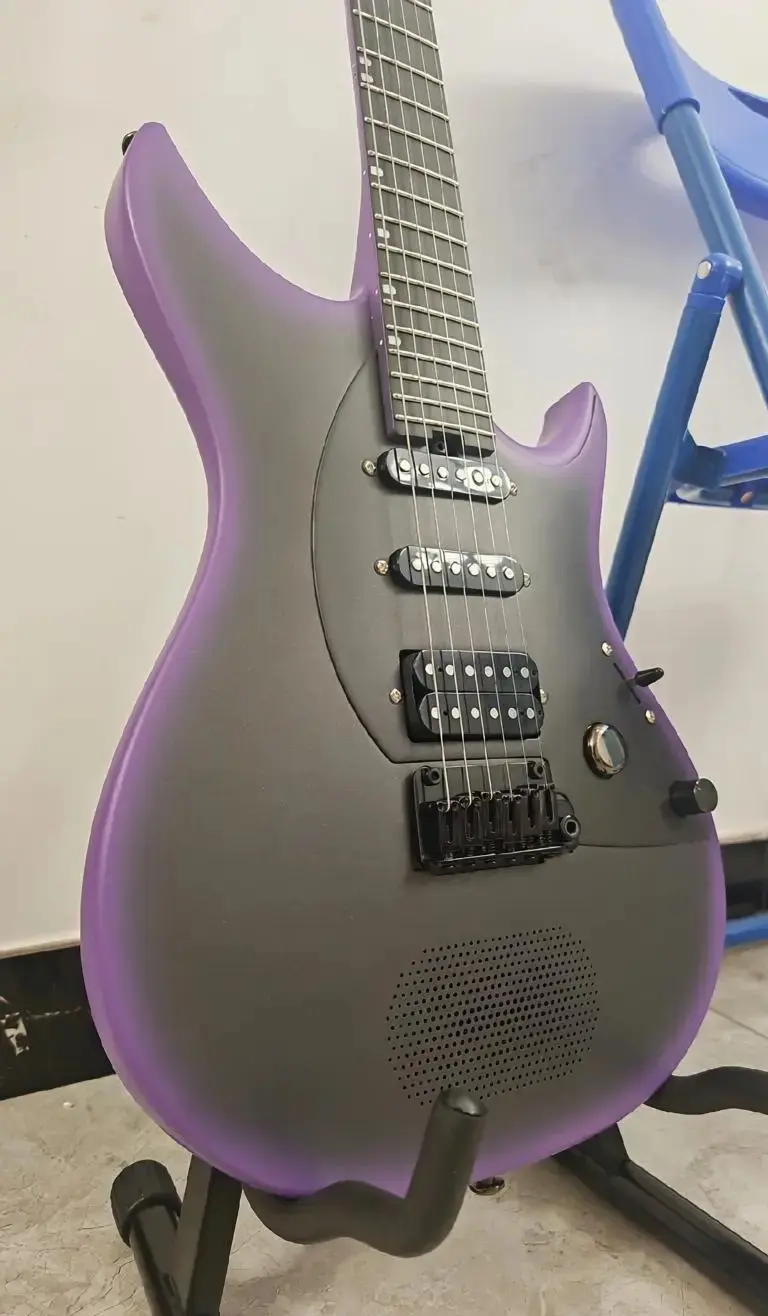
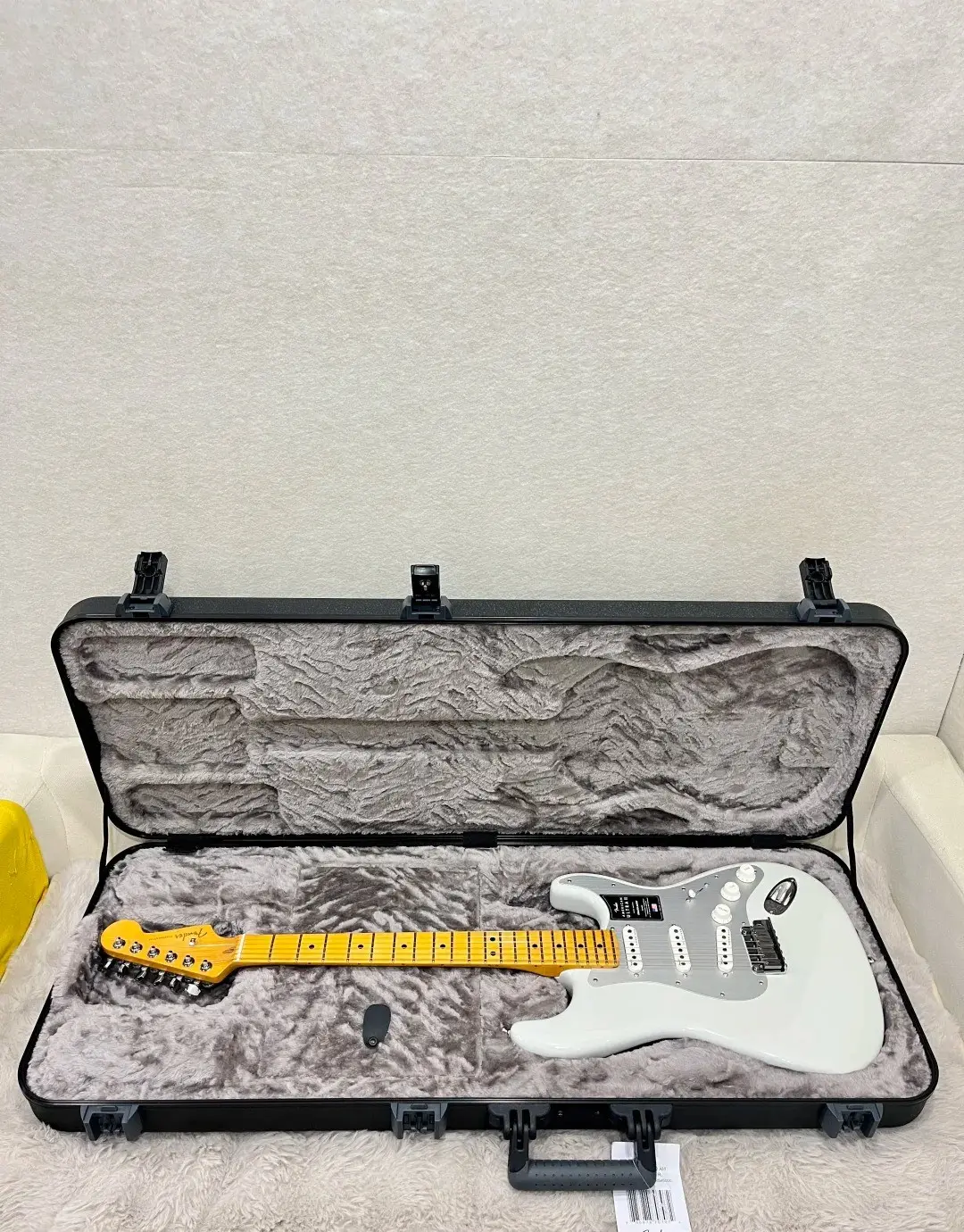
A floating vintage-style tremolo is a balance between string tension and springs. Use the bar and every string has to return to exactly the same spot, which depends on nut, saddles, string trees and springs all behaving. On a well set-up guitar they do; on a $200 Strat copy with a rough nut, often not. If you never use the bar, tighten the claw springs so the bridge sits flat against the body, or block it. A locking tremolo with a locking nut is the most stable design once set up, but string changes take much longer.
Environment and hardware: causes 5 to 7
Cause 5: temperature and humidity
Take a guitar from a cold car into a warm room and it is out of tune for twenty minutes. Steel strings move with temperature, and the neck moves with humidity over days. A guitar that is perfect in the evening and flat next morning is reacting to the room, not to a fault. Let it acclimatise before tuning and keep it away from radiators and windows.
Cause 6: worn or cheap tuners
Symptoms: a tuner with a dead zone where you turn and nothing happens, a wobbly button, or a string that drifts without being played. Often it just needs the button screw and the bushing nut on the headstock tightened. If the gears are actually worn, a set of sealed tuners is roughly $30 to $100 (2026, check current listings) plus fitting. Locking tuners are a real upgrade on a tremolo guitar because they remove most of the wraps.
Cause 7: dead, old or corroded strings
Old strings do not just sound dull, they stop behaving: corrosion and fret dents make them impossible to intonate, so they read in tune open and out on chords. If they are grey, rusty or older than a couple of months of regular playing, change them before diagnosing anything else. A set is roughly $6 to $15.
The player: cause 8
Cause 8: heavy playing and technique
The cause nobody wants to hear. Pressing too hard pulls notes sharp, especially with tall frets or light strings; aggressive strumming and big bends pull the string through the nut. If the guitar checks out on everything above and still wanders, watch your fretting-hand pressure. Beginners squeeze far harder than needed, which is also behind the soreness I cover in guitar finger pain for beginners.
Step-by-step diagnosis
- Strings older than two months or visibly worn? Change, stretch, come back tomorrow.
- Wraps on the posts neat, downward and few? If not, restring properly.
- Tune up, bend a string hard, check the tuner. Sharp after the bend plus a ping: nut. Flat after the bend: posts or tremolo.
- Happens mostly after moving rooms or overnight? Climate, not a fault.
- Tuners loose or with play? Tighten; replace if worn.
- Floating tremolo? Tighten the springs or block it and see if the problem disappears.
- Everything checks out? Film yourself and look at how hard you press.
Cause, fix and cost at a glance
| Cause | Fix | Cost (2026, check listings) | DIY? |
|---|---|---|---|
| Unstretched new strings | Stretch and retune 3 to 4 times | Free | Yes |
| Sloppy winding | Restring with 2 to 4 neat wraps | Free to $15 | Yes |
| Binding nut | Graphite or nut lube; slot work by a tech | Free to about $60 | Lube yes, filing no |
| Floating tremolo | Tighten springs, block, or full setup | Free to about $100 | Springs yes |
| Temperature / humidity | Acclimatise, store away from heat | Free to about $30 | Yes |
| Worn tuners | Tighten; replace with sealed or locking set | About $30 to $150 fitted | Tighten yes |
| Dead strings | New set | About $6 to $15 | Yes |
| Heavy hands | Lighter touch, gauge change, lessons | Free | Yes |
Riffbound verdict
Who it’s for: anyone whose guitar drifts between songs or goes sharp after bends. Nine times out of ten it is strings, winding or the nut, and all three are cheap to sort out at home.
What to remember: change and stretch the strings first, wind them neatly, lubricate the nut, and only then suspect tuners or tremolo. If the guitar is new and cheap and none of that helps, one professional setup usually ends the problem for good.
Read next: Why “just get it set up” is the best advice a beginner can get.
Based on owner and teacher feedback, no paid testing. How we review.
FAQ
Why does my guitar go out of tune when I bend strings?
Usually the nut or the posts. Sharp after the bend means the string is catching in the nut slot; lubricate it. Flat means the wraps are slipping or a floating tremolo is not returning to rest.
Why does my new guitar keep going out of tune?
Unstretched strings, untidy factory windings and a nut that has never been lubricated. Fix those three before assuming the guitar is faulty.
Do locking tuners stop a guitar going out of tune?
They help, especially on tremolo guitars, because they remove the wraps that hide slack. They do nothing for a binding nut or dead strings, so fix those first.
Sources and method
This synthesis is based on my own years of restringing and setting up electric and acoustic guitars, and on owner feedback read on the following communities (consulted in 2026):
- r/Guitar (owner feedback, very high volume)
- Ultimate Guitar (reviews and forums)
- The Gear Page (in-depth discussion of nuts, tuners and tremolo setups)
- Manufacturers’ official documentation on bridges and tuning machines (fender.com, ibanez.com)
We receive no free gear and no brand reads our articles. Merchant links are affiliate links: how we work.
Read next



This page contains affiliate links. If you buy through them, we may earn a commission at no extra cost to you.